About Radiesse and Hyperdilute Radiesse
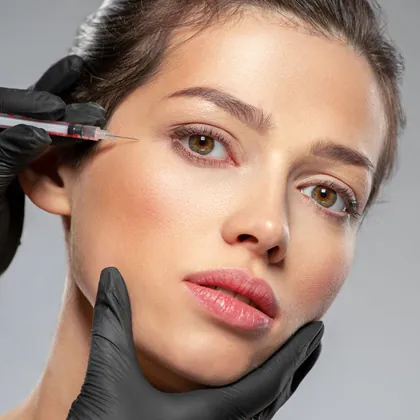
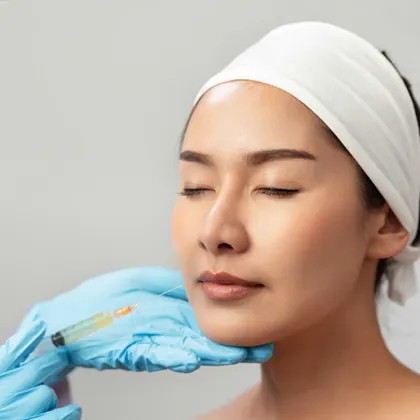
Radiesse® is an injectable biostimulator made with calcium hydroxylapatite (CaHA) microspheres. It can be used in its traditional form for structural support and contouring or diluted as Hyperdilute Radiesse for broader collagen and elastin stimulation.
At MIHSA Aesthetics, your plan is customized based on your anatomy, degree of volume or structural loss, skin quality, laxity, and aesthetic goals. Your provider will determine whether traditional Radiesse, Hyperdilute Radiesse, or a combination approach is the best fit for you.
How it works
Traditional Radiesse contains CaHA microspheres suspended in a gel carrier. The gel provides immediate support and contour in selected areas, while the CaHA microspheres act as a scaffold that encourages collagen and elastin production over time.
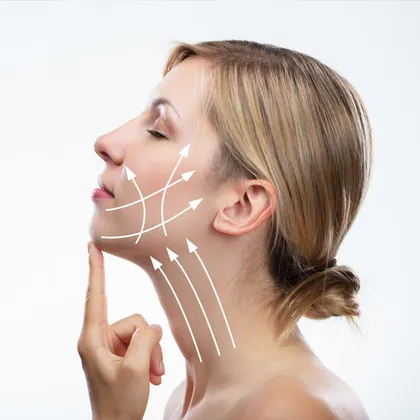
With Hyperdilute Radiesse, the product is diluted and distributed across a broader area. Rather than focusing on adding volume or creating definition, the goal is primarily biostimulation—encouraging collagen and elastin production to improve firmness, texture, and the appearance of skin laxity.
Benefits
- Encourages natural collagen and elastin production
- Provides structural support and contour when used traditionally
- Improves skin firmness and quality when used hyperdilute
- Helps improve the appearance of laxity and crepey skin
- Can be customized for face, hands, neck, and selected body areas
- Provides progressive, natural-looking rejuvenation
Who it's for
Traditional Radiesse may be a good fit for clients looking for greater structure, support, or contour in selected areas while also benefiting from collagen stimulation.
Hyperdilute Radiesse may be better suited for clients whose primary concerns are skin laxity, crepiness, thinning skin, or reduced firmness rather than volume loss.
Some clients benefit from both approaches as part of a personalized plan. Your provider will evaluate your anatomy and skin quality to determine the best option.
Areas
Depending on whether traditional or Hyperdilute Radiesse is used, areas may include:
- Cheeks
- Temples
- Nasolabial folds
- Smile lines
- Jawline
- Lower face
- Hands
- Neck
- Décolletage
- Selected facial areas needing structural support
- Selected body areas with skin laxity or crepiness
Not every area is suitable for Radiesse. Areas, product preparation, and technique are selected following a personalized assessment.
Frequently asked questions
What are Radiesse and Hyperdilute Radiesse, and how do they work?
Both use Radiesse, which contains calcium hydroxylapatite (CaHA) microspheres that encourage collagen and elastin production. Traditional Radiesse also provides immediate structural support and contour through its gel carrier. Hyperdilute Radiesse is diluted for broader distribution, shifting the focus toward improving skin firmness, texture, and overall quality rather than creating significant volume.
When will I see results?
With traditional Radiesse, structural and contouring changes may be visible immediately, although swelling can temporarily influence the initial appearance. With Hyperdilute Radiesse, results are more gradual and develop as collagen and elastin remodeling occurs. Improvements in skin quality may continue developing over the following weeks and months.
How long do results last?
Results vary depending on whether traditional or Hyperdilute Radiesse is used, the area, amount of product, individual collagen response, metabolism, age, and lifestyle. Traditional Radiesse results commonly last approximately 12–18 months, while collagen improvements may continue beyond that. Individual results vary.
How many sessions will I need, and how often?
It depends on your goals. Some clients achieve their desired result with one session of traditional Radiesse, while others need more. Hyperdilute Radiesse may be recommended as a series, particularly for skin laxity or larger areas. Your provider will determine the right number of sessions and maintenance schedule for you.
What is the recovery time or downtime?
Downtime is generally minimal. Temporary swelling, redness, tenderness, bruising, or firmness can occur with either approach. The extent and duration vary depending on the area, amount of product used, and technique. Your provider will give you personalized aftercare instructions.